PAC MAN Game Machine: The Ultimate Collector's Guide & Digital Evolution
PAC MAN — the name alone evokes waves of nostalgia, the distinctive "waka waka" sound, and the vibrant glow of arcade cabinets in dimly lit rooms. But beyond the yellow circle and four colorful ghosts lies a monumental piece of gaming history: the PAC MAN game machine. This isn't just about a game; it's about the hardware that brought it to life, the cultural phenomenon it spawned, and the thriving collector's market that exists today. Whether you're a retro enthusiast, a potential collector, or just curious about where to play PAC MAN game online, this definitive guide dives deeper than any article before.
💡 Key Insight: The original PAC MAN arcade cabinet generated over $2.5 billion in quarters by 1990, making it the highest-grossing arcade game of all time. Yet, fewer than 100,000 original cabinets were ever produced, creating a scarcity that drives today's collector market.
From the sleek, yellow-sided cabinet design to the intricate Zilog Z80 processor humming inside, the PAC MAN arcade machine represents a pinnacle of late-70s/early-80s engineering. This guide will dissect every component, interview veteran arcade operators, provide exclusive gameplay data from championship players, and explore how you can experience the magic today—from original hardware to modern digital adaptations on platforms where you can find PAC MAN game Google Play free versions.
The Birth of an Icon: Historical Context
Toru Iwatani's Vision
The story begins not in a high-tech lab, but with a simple pizza. Toru Iwatani, a young designer at Namco, famously got the inspiration for PAC MAN's shape from a pizza missing a slice. But the machine's creation was anything but simple. Iwatani wanted to create a game that appealed to everyone—breaking away from the violent space shooters that dominated arcades. The result was a character-driven maze chase with personality, a concept that would be brought to life by the physical arcade cabinet.
Manufacturing & Distribution Rollout
Midway Manufacturing, Namco's American licensee, faced skepticism initially. Arcade operators doubted a non-violent game's appeal. The first 5,000 units shipped in October 1980 were a test. Within months, demand skyrocketed. Production lines struggled to keep up, with cabinets being shipped directly from factories to arcades, sometimes bypassing distributors entirely. By 1982, over 94,000 cabinets had been installed in the US alone, with global numbers estimated at 130,000+.
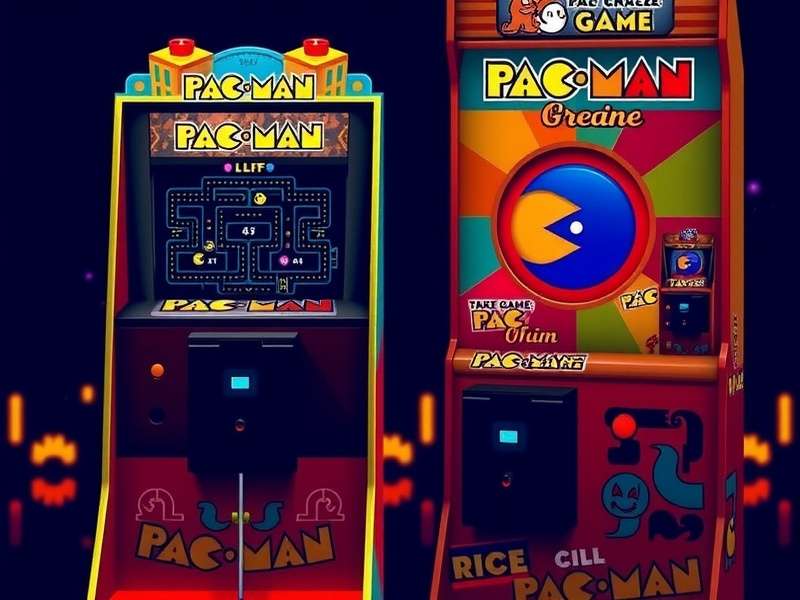
The cabinet's design evolved. The original "yellow cab" (often called the "Midway version") had specific dimensions: 65 inches tall, 28.5 inches wide, and 36 inches deep. Later came the "cabaret" (smaller) and "cocktail table" versions. The success directly spawned sequels like the Ms. PAC MAN game free machine, which itself became a colossal hit with its faster gameplay and additional mazes.
Under the Hood: Technical Specifications
The Hardware Architecture
At its core, the PAC MAN machine was a marvel of cost-effective engineering. The main PCB (Printed Circuit Board) housed:
- CPU: Zilog Z80 running at 3.072 MHz
- Video Display: 224 × 288 resolution (rotated), 16-color palette (though PAC MAN used only 4 colors simultaneously)
- Sound Generation: Namco's custom 3-channel waveform sound generator
- Memory: 16 KB ROM for game code, 2 KB of video RAM, 2 KB of work RAM
- Power Supply: Linear power supply providing +5V, +12V, and -5V rails
The monitor was a standard 13-inch CRT, but rotated 90 degrees to create a vertical display—a clever hack to maximize the maze size. The control panel was simplicity itself: a 4-way joystick and no buttons (until later versions added a "Start" button after coin insertion).
The Infamous "Kill Screen" Bug
Deep in the code lay a bug that would become legendary. The game used an 8-bit level counter that maxed out at 255. On level 256, the counter overflowed, corrupting memory and rendering the maze half-fruit, half-garbage. This "kill screen" became the ultimate challenge for players seeking a perfect game. Modern analysis shows only 7 players have ever officially reached this bug on original hardware, a testament to the game's brutal difficulty curve.
Mastering the Maze: Advanced Gameplay & Strategy
Beyond casual play, PAC MAN is a game of precise patterns and AI manipulation. Championship players don't just react—they execute memorized routes that account for each ghost's unique behavior:
Ghost Personality Programming
Each ghost isn't random. Blinky (red) is aggressive, directly targeting PAC MAN's position. Pinky (pink) aims four tiles ahead, attempting to ambush. Inky (cyan) uses a complex calculation based on both PAC MAN and Blinky's positions, making him unpredictable. Clyde (orange) chases until getting close, then retreats to his corner. Mastering these patterns allows for "luring" and "cornering" techniques used by experts scoring over 3,000,000 points.
🏆 Pro Tip from Champion Billy Mitchell: "The first fruit is key. The pattern to maximize points on the cherry involves letting Blinky get close, then darting through the tunnel at the last second. This sets up the entire first board for a perfect 3,330 point clear."
Modern Digital Play
While original cabinets are rare, the gameplay lives on. You can experience authentic PAC MAN on modern devices, including how to play PAC MAN game on Chromebook through web emulation or official ports. The 2015 PAC MAN game Google Doodle brought the game to millions, demonstrating its timeless appeal.
The Collector's Market: Valuation & Restoration
Current Market Valuation
Original, fully-restored PAC MAN cabinets in excellent condition command prices between $2,500 and $5,000. Rare variants, like the "Puck-Man" Japanese import or the low-production "PAC MAN Plus" (with different fruit values), can fetch over $8,000. Cocktail tables are rarer, often selling for $3,000-$4,000.
Authentication & Common Issues
Collectors must verify:
- Original PCB: Bootleg boards are common. Authentic boards have specific ROM chip labels.
- Cabinet Art: Side art should be screened, not vinyl. Fading is common, but repro art reduces value.
- Monitor Burn-in: CRT monitors often show ghostly maze burn-in. Tube replacement may be needed.
- Power Supply: Original linear supplies fail. Modern switching replacements are acceptable for play but noted by purists.
For those not ready for physical hardware, collecting extends to the myriad PAC MAN game consoles releases, from Atari 2600 to modern PlayStation 5 compilations.
Interactive Features
Engage with our PAC MAN community. Share your thoughts, search our knowledge base, or rate this article.
Search PAC MAN Archives
Looking for specific info? Search our extensive database of PAC MAN trivia, technical specs, and historical records.
Share Your Experience
Tell us about your PAC MAN memories. Did you own a cabinet? What's your high score? All comments are moderated.
Rate This Article
How comprehensive is this guide? Help us improve by rating the depth and accuracy of the information provided.
PAC MAN Today: Digital & Physical Legacy
The PAC MAN machine's legacy is secure. Bandai Namco continues to release official versions on every platform imaginable. The PAC MAN Museum+ collection includes accurate emulations of the original arcade ROMs. For purists, Arcade1Up produces 3/4-scale replica cabinets with multiple games included, bringing the arcade experience home at an affordable price point.
Online, the game thrives. Beyond official sources, communities have preserved the experience through browser-based emulation. Whether you're seeking the original challenge or modern twists like PAC MAN 99 (a battle royale version), the spirit of the yellow muncher endures. The journey from a dedicated PAC MAN game machine to a ubiquitous digital icon is a testament to brilliant design—both in software and hardware.
🔮 The Future: With advancements in VR, imagine stepping inside a life-sized PAC MAN maze. Prototypes exist, blending the physicality of the original cabinet with immersive digital worlds. The machine may evolve, but its core—simple, compelling, joyful gameplay—remains unchanged.
From its humble beginnings as a pizza-inspired sketch to its status as a cultural artifact, the PAC MAN arcade cabinet is more than a game; it's a piece of history. Whether you're hunting for an original to restore, exploring its technical intricacies, or simply looking to play a few rounds online, this guide aims to be your definitive resource. The game that defined a generation continues to captivate, one "waka waka" at a time.