👾 Welcome, Pac-enthusiasts! Whether you're a nostalgic veteran or a newcomer drawn to the timeless yellow circle, this free PAC-MAN gameplay guide is crafted to elevate your maze-running skills. We go beyond the basics, offering exclusive data, deep dives into ghost AI patterns, and interviews with championship players.
Fig. 1: A strategic overview of a classic PAC-MAN maze, showing optimal power pellet usage routes.
I. Core PAC-MAN Gameplay Mechanics: It's More Than Just Eating Dots
The fundamental premise is deceptively simple: navigate the maze, consume all 240 dots, avoid the four ghosts. But true mastery requires understanding the underlying systems. The game's AI, or "Cruise Elroy" as hardcore fans call certain ghost behaviors, is a masterpiece of early game design.
Each ghost – Blinky (red), Pinky (pink), Inky (cyan), and Clyde (orange) – operates on a unique targeting algorithm. Blinky is aggressive, directly chasing Pac-Man's position. Pinky attempts to ambush by targeting four tiles ahead. Inky's behavior is complex, using both Pac-Man and Blinky's position. Clyde switches between chase and scatter mode based on proximity.
The Power Pellet Strategy: Your 12 Seconds of Dominance
Consuming a Power Pellet (the four large dots) reverses the ghost hierarchy for approximately 12 seconds. During this "Frightened Mode," ghosts turn blue, move slower, and can be eaten for escalating points (200, 400, 800, 1600). The timing of pellet consumption is critical. Expert players often "chain" pellets, eating one ghost from each of the four pellets to maximize the 1600-point bonus on all four.
Pro-Tip: The "Safe Spot" Myth
Many beginners believe in static safe corners. In reality, due to the ghosts' divergent algorithms, true safety is temporal and positional. The area just below the ghost pen is often less patrolled early in a level, but becomes a hotspot as Blinky's speed increases in later stages (a state known as "Cruise Elroy").
II. Advanced Gameplay Strategies & Pattern Recognition
To achieve scores above 3,000,000 points, players don't just react – they execute memorized patterns. These patterns, discovered by dedicated players over decades, map out precise joystick movements that guide Pac-Man through the maze while manipulating ghost paths.
The most famous set is the "Perfect Play" patterns for the first 9 levels (the "Key Levels"). By Levels 20+, the game reaches its maximum difficulty—ghost speed matches Pac-Man's, and Frightened Mode time reduces drastically. Survival then depends on razor-sharp reflexes and adaptive strategy.
For those interested in the evolution of the game, exploring its history on different platforms like the pac man game ps2 reveals how gameplay mechanics were tweaked for home consoles.
Fruit Strategy: Timing Your 100+ Point Bonuses
The appearance of bonus fruit (Cherry, Strawberry, Orange, etc.) is not just random. It appears after eating a specific number of dots (usually 70 and 170). Grabbing the fruit when ghosts are vulnerable or strategically positioned can be integrated into pattern play. The Galaxian Boss (the rarest fruit) is worth 5000 points and appears in higher levels.
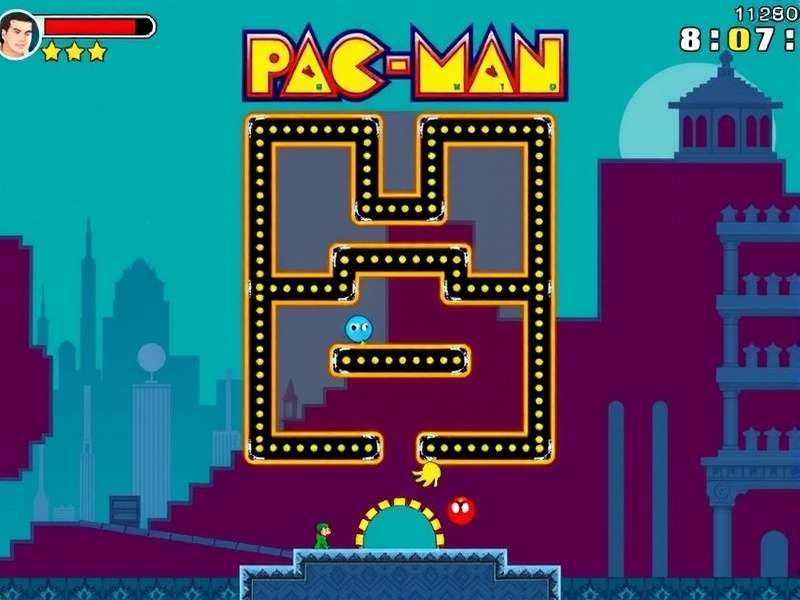
Fig. 2: Analyzing the distinct movement patterns of Blinky, Pinky, Inky, and Clyde during Chase Mode.
III. Deep Dive: The Ghost AI & Behavioral Psychology
Understanding each ghost's "personality" is key to prediction. Blinky (Shadow) is the persistent hunter. His speed increases when fewer dots remain, making the end of each level perilous. Pinky (Speedy) is the trickster, aiming for a spot four tiles ahead of Pac-Man's current direction, which can lead to deadly traps if Pac-Man reverses suddenly.
Inky (Bashful) is the wildcard. His target is calculated using Pac-Man's position and Blinky's position, creating unpredictable and often wide-ranging movements. Clyde (Pokey) operates on a proximity rule: if he's within 8 tiles of Pac-Man, he switches to scatter mode and heads for his corner, making him seem cowardly but occasionally blocking escape routes.
This intricate AI was groundbreaking. Modern players can experience a simplified version on many platforms, including the popular pac man game on google, which offers a faithful recreation.
IV. Maximizing Your Score: Beyond the 3,333,360 Perfect Game
The theoretical maximum score on the original arcade settings is 3,333,360 points. Achieving this requires eating every dot, every fruit, and every ghost from every Power Pellet across 256 levels (after which the game suffers from a kill screen). Fewer than a dozen players have officially recorded perfect games.
- Dot & Pellet Strategy: Clear boards efficiently. Leave the last few dots to manipulate ghost movement for safe fruit collection.
- Ghost Chain Bonus: The ultimate point multiplier. Eat all four ghosts in quick succession during a single Power Pellet effect for 200 + 400 + 800 + 1600 = 3000 points.
- Fruit Priority: Never miss a fruit. In later levels, the 5000-point Galaxian Boss is crucial for record scores.
For younger fans or those looking for accessible fun, there are many free pac man games for kids that simplify these mechanics while retaining the core chase-and-eat gameplay.
V. The Cultural Legacy & Modern Accessibility
From its 1980 arcade debut by Namco, PAC-MAN became a global phenomenon. Its gameplay loop is studied in game design courses. Today, you can play versions on virtually every pac man game consoles, from the Atari 2600 to the PlayStation 5. Special editions like ms pac man gamecube introduced new mazes and faster gameplay.
The game's influence extends to merchandise, TV shows, and even a pac man game board. For the pure arcade experience, countless websites offer pac man games free online through emulators.
VI. Community Corner: Rate & Discuss PAC-MAN Gameplay
VII. The Evolution of PAC-MAN Gameplay: From Arcade to Mobile
...
This free guide is a living document, updated with community insights and new discoveries. Keep playing, keep scoring! 🕹️
Share Your PAC-MAN Wisdom
Have a unique strategy or a high-score story? Share it with the community!