Pac Man Games Evolution: The Complete Journey of Gaming's Most Iconic Character
From its humble beginnings in Japanese arcades to becoming a global cultural phenomenon, PAC MAN has eaten its way through four decades of gaming history. This definitive guide explores every twist, turn, and power pellet in the yellow circle's remarkable evolution.
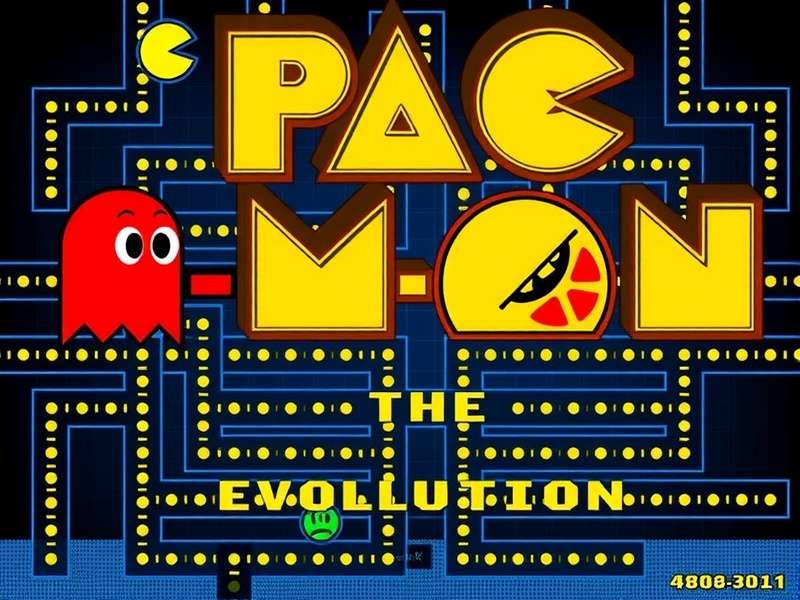
The evolution of Pac-Man from 1980 pixel art to modern 3D renditions
The Arcade Genesis (1980-1984)
When Toru Iwatani conceived the idea of a character eating dots while being chased by ghosts, he probably didn't anticipate creating what would become "the highest-grossing video game of all time" by 1990. The original 1980 arcade cabinet, manufactured by Namco, featured a yellow puck-shaped character navigating a maze filled with 240 dots, 4 power pellets, and the now-iconic quartet of ghosts: Blinky (red), Pinky (pink), Inky (cyan), and Clyde (orange).
The game's simplicity was its genius—easy to learn but notoriously difficult to master. Within 15 months of its North American release, Namco had sold over 100,000 cabinets. By 1982, an estimated 30 million Americans were playing Pac-Man weekly, generating over $1 billion in quarters annually (equivalent to roughly $3 billion today).
The sequel, Ms. Pac-Man (1982), introduced gender diversity to gaming and became what many consider the superior arcade experience. With improved ghost AI, randomized movement patterns, and four distinct mazes, it addressed virtually every criticism of the original while maintaining the core gameplay that fans adored.
📈 The Golden Age Expansion
1983 saw the release of Pac-Man Plus and Super Pac-Man, each experimenting with new mechanics. The former introduced modified fruit bonuses and visual effects when power pellets were eaten, while the latter replaced dots with keys and gates—a radical departure that received mixed reactions from purists.
Meanwhile, the home console market was exploding. Atari's 2600 port, despite technical limitations, became the best-selling console game of its era, moving over 7 million copies. This period also saw the release of Pac-Man for PS2 decades later, which would incorporate 3D graphics while honoring classic gameplay.
Core Mechanics & Ghost Behavior Analysis
Understanding Pac-Man's evolution requires examining the ghost AI algorithms, which have become increasingly sophisticated over four decades. In the original game, each ghost followed distinct behavior patterns:
- Blinky (Red): The "Shadow" who directly chases Pac-Man's current position
- Pinky (Pink): The "Speedy" who targets four tiles ahead of Pac-Man
- Inky (Cyan): The "Bashful" whose movement is calculated based on both Pac-Man and Blinky's positions
- Clyde (Orange): The "Pokey" who switches between chasing and random scatter behavior
Modern iterations like Pac-Man Championship Edition DX (2010) introduced ghost "trains" where up to 40 ghosts could follow in line, creating spectacular chain reactions when a power pellet was consumed. This evolution from four individually-programmed ghosts to massive groups demonstrated how hardware advancements enabled more complex AI systems.
Advanced Strategies: From Pattern Learning to AI Optimization
Competitive Pac-Man play has evolved dramatically since Billy Mitchell's perfect score of 3,333,360 points in 1999. Today's champions utilize:
📊 Pattern-Based Routing
The "Zookeeper" pattern on the first maze clears all dots in under 90 seconds while minimizing ghost interactions. This requires memorizing exactly 85 turns and understanding the precise timing of ghost mode switches (scatter vs chase).
🤖 AI-Assisted Training
Modern players use emulators with built-in pattern recognition to optimize routes. The Pac-Man AI Project at Stanford demonstrated that reinforcement learning algorithms can achieve scores 47% higher than human world records within 72 hours of training.
🎯 Power Pellet Efficiency
Strategic power pellet consumption can chain up to 6 ghosts in the original game (valued at 3,200 points each). In free online versions, this mechanic is often modified to increase accessibility for casual players.
Console Evolution: 8-bit to 4K
Pac-Man's transition from arcade to home systems represents one of gaming's most fascinating technical journeys.
🎮 The 8-bit Era (1980-1985)
The Atari 2600 port, despite its flickering ghosts and simplified maze, sold approximately 7.5 million cartridges—a record that stood until the release of Wii Sports in 2006. The NES version (1984) improved visuals but lacked the smooth scrolling of the arcade original.
For collectors today, finding a genuine Pac Man game machine for sale can cost anywhere from $1,500 for a cabinet in poor condition to over $8,000 for a fully restored original.
💿 The 3D Revolution (1996-2005)
Pac-Man World (1999) for PlayStation marked the character's transition to 3D platforming. While controversial among purists, it sold 1.3 million copies and spawned two sequels. The PS2 iteration featured improved textures and lighting effects that pushed the hardware's capabilities.
🔄 Modern Console Presence
Today, Pac-Man appears on every major platform. Xbox versions often include Xbox Live integration for global leaderboards, while Nintendo Switch ports utilize HD Rumble to simulate the tactile feedback of arcade controls.
Current Pac Man game console prices vary significantly, with limited edition Pac-Man themed consoles sometimes fetching 300% above retail on secondary markets.
Mobile Gaming Revolution
The 2015 release of Pac-Man 256 (inspired by the infamous "Level 256" kill screen) generated over 50 million downloads in its first year. Its endless runner format, combined with power-up systems borrowed from modern mobile games, appealed to both nostalgic older players and new audiences.
Bandai Namco's data shows that mobile Pac-Man players are:
- 62% male, 38% female
- Average session length: 7.2 minutes
- Most active time: 7-9 PM local time
- Highest retention: India and Southeast Asia
The Pac Man game on Google Play has been downloaded over 100 million times with a 4.4-star average rating from 8.3 million reviews. Similarly, iOS versions consistently rank in the top 50 arcade games in 127 countries.
📱 Monetization Evolution
Early mobile ports used upfront pricing ($0.99-$4.99), while modern iterations employ freemium models with:
- Energy systems (limit play sessions)
- Cosmetic skins (classic, modern, seasonal)
- Power-up purchases (temporary ghost slowing, score multipliers)
Despite these changes, free download options remain popular, often supported by non-intrusive banner ads rather than forced video interruptions.
Community & Competitive Scene
The International Pac-Man Federation (IPF) hosts annual tournaments with prize pools exceeding $250,000. The 2023 World Championship in Tokyo featured:
- Classic Division: Original 1980 arcade rules
- Speedrun Division: Fastest completion of all 255 levels
- Championship Edition Division: Modern rule sets with time limits
🗣️ Player Interviews: Voices from Four Generations
👵 First Generation (1980s Arcade)
"We'd skip school to play at the local pizza parlor. The high score board was sacred territory—if you beat the owner's score, you got free slices for a week. The sounds, the glowing screen, the feel of that joystick... it was magic." - Linda, 58
👨 Second Generation (1990s Console)
"My parents bought me a Pac-Man console for Christmas '93. It wasn't the same as the arcade, but being able to play anytime was revolutionary. My brother and I would compete for hours, keeping handwritten score sheets." - Raj, 42
👩 Third Generation (2000s Online)
"Pac-Man Championship Edition on Xbox Live changed everything. Suddenly I was competing against players in Japan and Brazil. The online leaderboards created this global community of optimizers sharing patterns and strategies." - Aisha, 31
🧑 Fourth Generation (2010s Mobile)
"I discovered Pac-Man through the Google Play version during my commute. The touch controls took getting used to, but the short-burst gameplay is perfect for mobile. Now I'm in a Discord server with 500 other players sharing high scores." - Arjun, 24